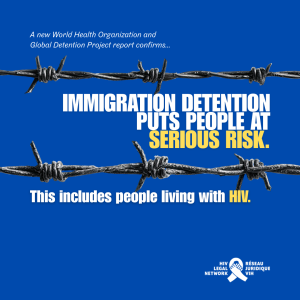
 The World Health Organization (WHO) and Global Detention Project (GDP) have shared a new evidence brief highlighting the profound and systemic health risks within immigration detention.
This evidence reinforces what we have long known: detention is inherently harmful. When people are held in carceral settings with restricted access to specialized care, the system itself becomes a driver of poor health outcomes. Key takeaways from the brief:
- Fragmented healthcare and a lack of proper screening leave people living with HIV or hepatitis C at serious risk by delaying or denying life-saving treatment.
- The restricted, carceral nature of detention centers creates conditions that facilitate the spread of communicable diseases.
Our report, “Hard Time Persists: Healthcare and Harm Reduction in Immigration Detention,” highlights these same failures in Canada. The lack of robust harm reduction and STBBI prevention tools in detention settings needlessly exposes people to health risks and violates their right to the highest attainable standard of health.
Thank you, GDP and WHO, for emphasizing that the most effective way to protect health is to avoid the use of detention altogether.
Read the WHO/GDP Brief: www.globaldetentionproject.org/health-in-immigration-detention-gdp-evidence-brief-for-the-who
Read our report: www.hivlegalnetwork.ca/site/hard-time-persists-healthcare-and-harm-reduction-in-immigration-detention